Overview
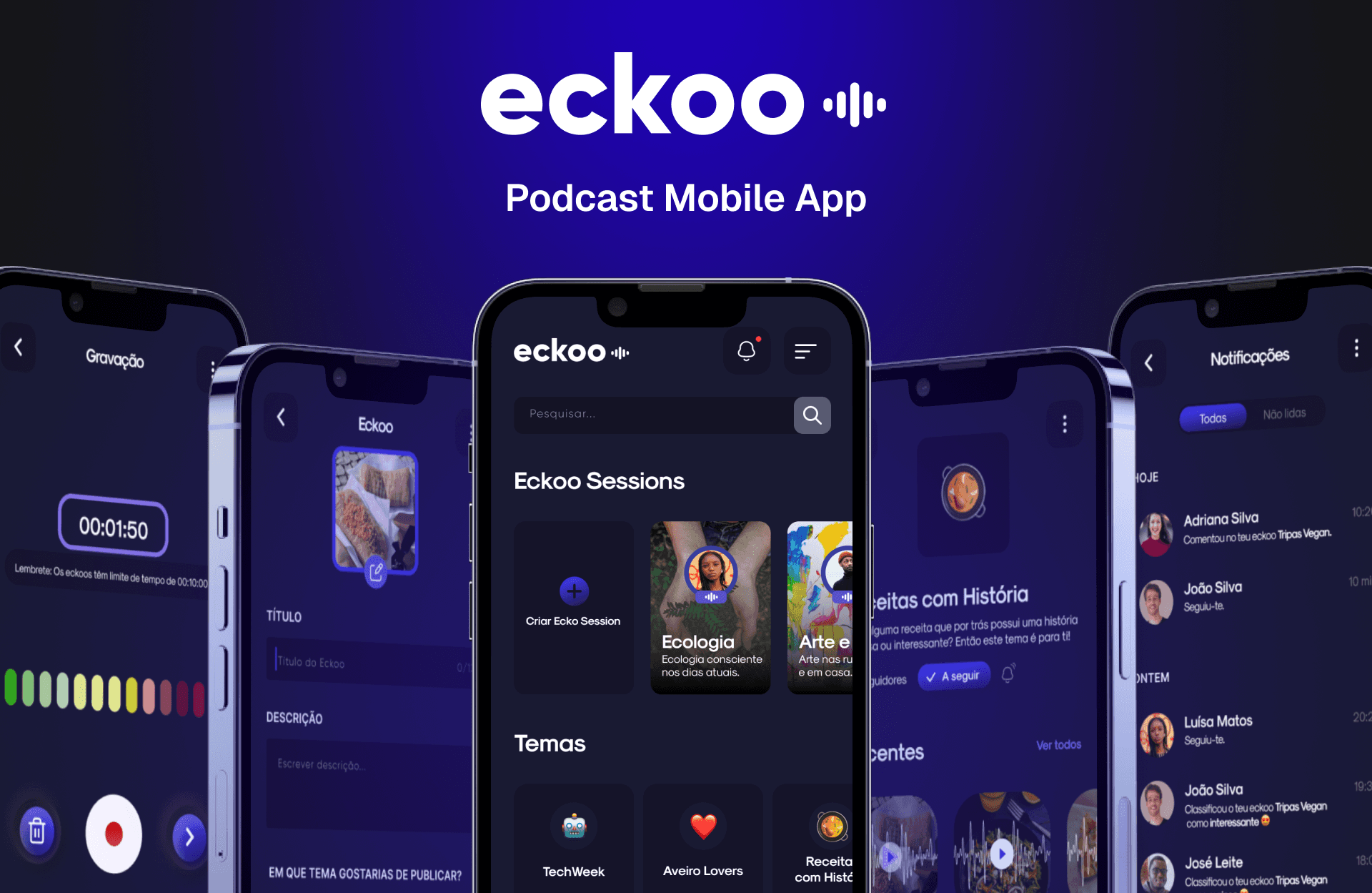
Eckoo was created to address the challenge posed by the Aveiro City Council in its bid for European Capital of Culture 2027. The app aimed to foster community engagement, turning residents into "digital activists" by sharing stories and talents through audio.
🏆 This project secured the 3rd place in the Aveiro Tech City Academia Challenges 2022.
Challenges
📉 Low Awareness: Residents lacked understanding of Aveiro’s 2027 European Capital of Culture bid.
📢 Fragmented Communication: Traditional social media (Instagram, Facebook) failed to foster localized, voice-driven dialogue.
Design Process
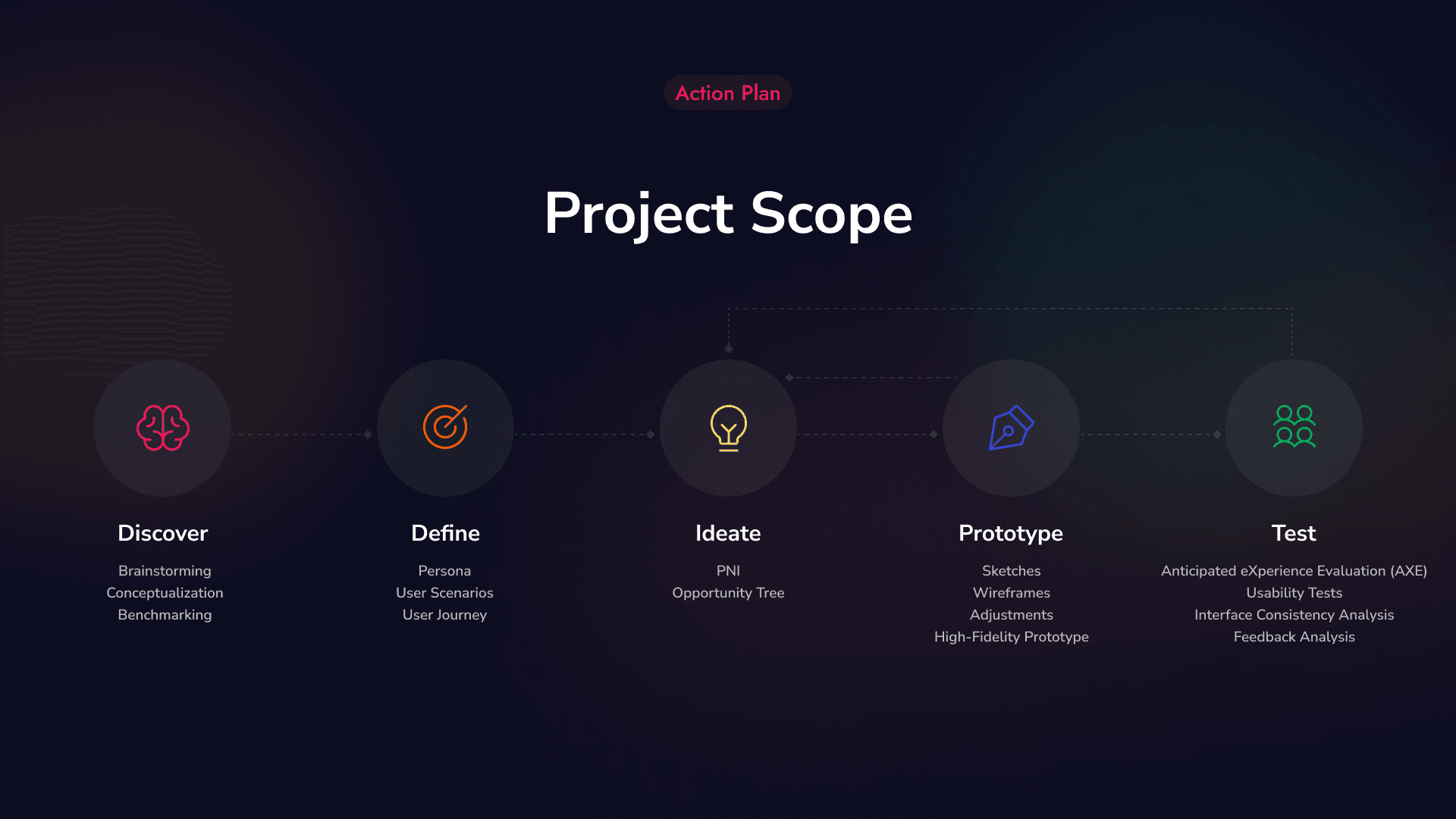
Our journey to create Eckoo began in November 2021, and followed the Design Thinking Methodology. This process was divided into five iterative phases, each playing a crucial role in shaping Eckoo into the platform the users expected. Let’s break it down:
Discover
This phase was all about exploration and understanding. The team started by brainstorming ideas to address the challenge of low engagement with Aveiro’s bid for the European Capital of Culture 2027. We asked questions like:
How can we make people care about Aveiro’s cultural bid?
What tools can we use to foster digital activism?
We also conducted benchmarking to analyze competitors like Clubhouse and Discord. This helped us identify what worked, what didn’t, best practices and main features in existing audio-based platforms.
Key outcomes
A clear understanding of the problem: low awareness and engagement.
Insights into what can make audio platforms successful.
A rough idea of Eckoo’s potential: a localized, community-driven audio platform.
Define
With the problem clearly defined, we moved on to defining the product vision. The main question to answer in this phase were:
Who are we building this for?
What do our users need?
We first created user personas like Renato (a museum owner)and Mariana (the sustainability advocate). These personas helped us understand our target audience’s goals, pain points, and motivations.
We also mapped out user journeys and user flows to visualize how users would interact with the product, from discovering the platform to sharing their first audio clip.
Ideate
This phase was all about brainstorming and valuing the product. We asked:
What features should the product have?
How can we make it stand out?
We came up with the core features of the app:
Eckoos: Short audio clips for sharing stories.
Eckoo Sessions: Live discussions to foster real-time engagement.
Themes: Topics like “Aveiro Lovers” and “Sustainability” to guide conversations.
We also defined social features, such as user profiles, commenting, and playlist creation, to ensure the platform was both engaging and easy to use.
Prototype
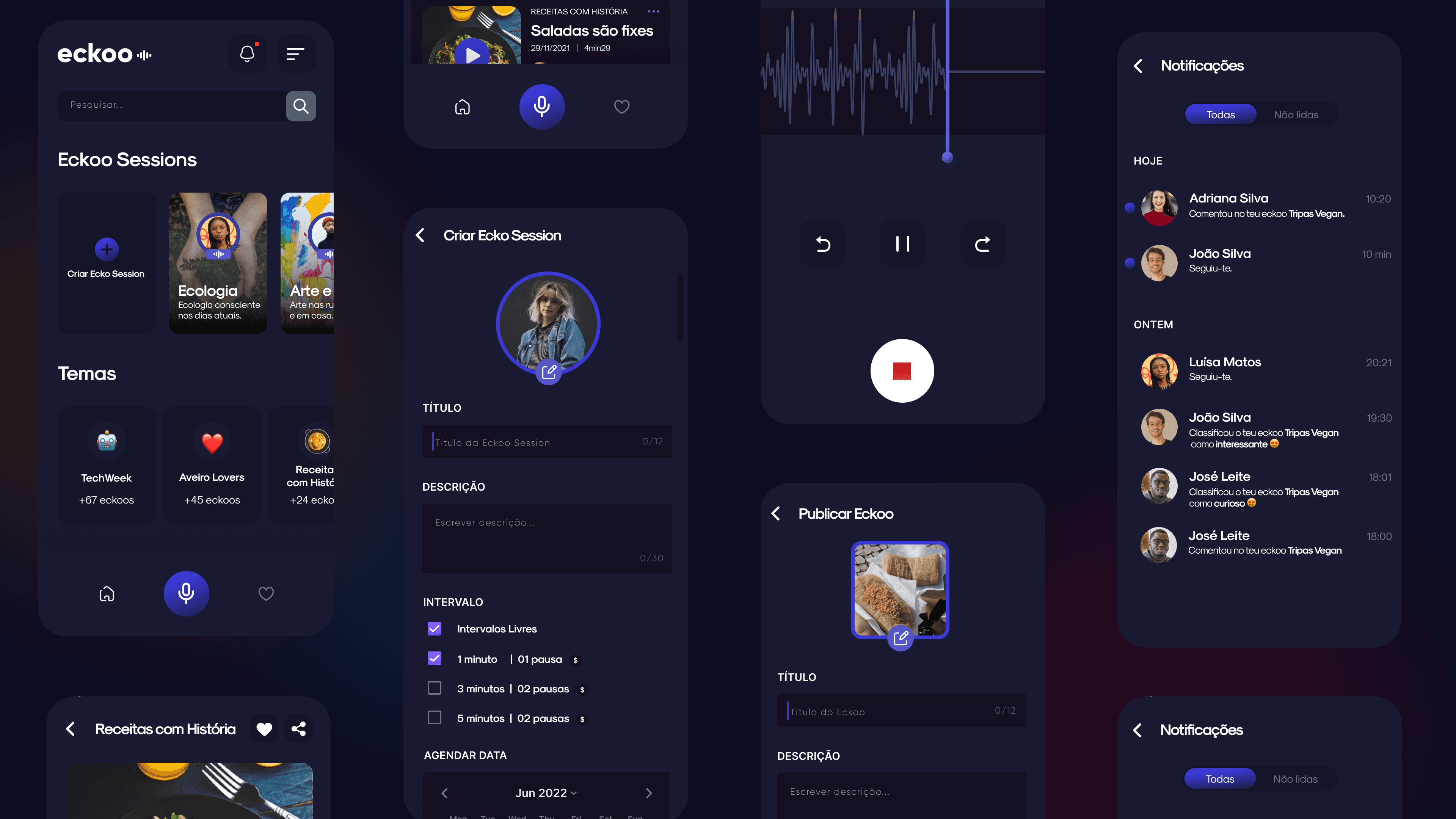
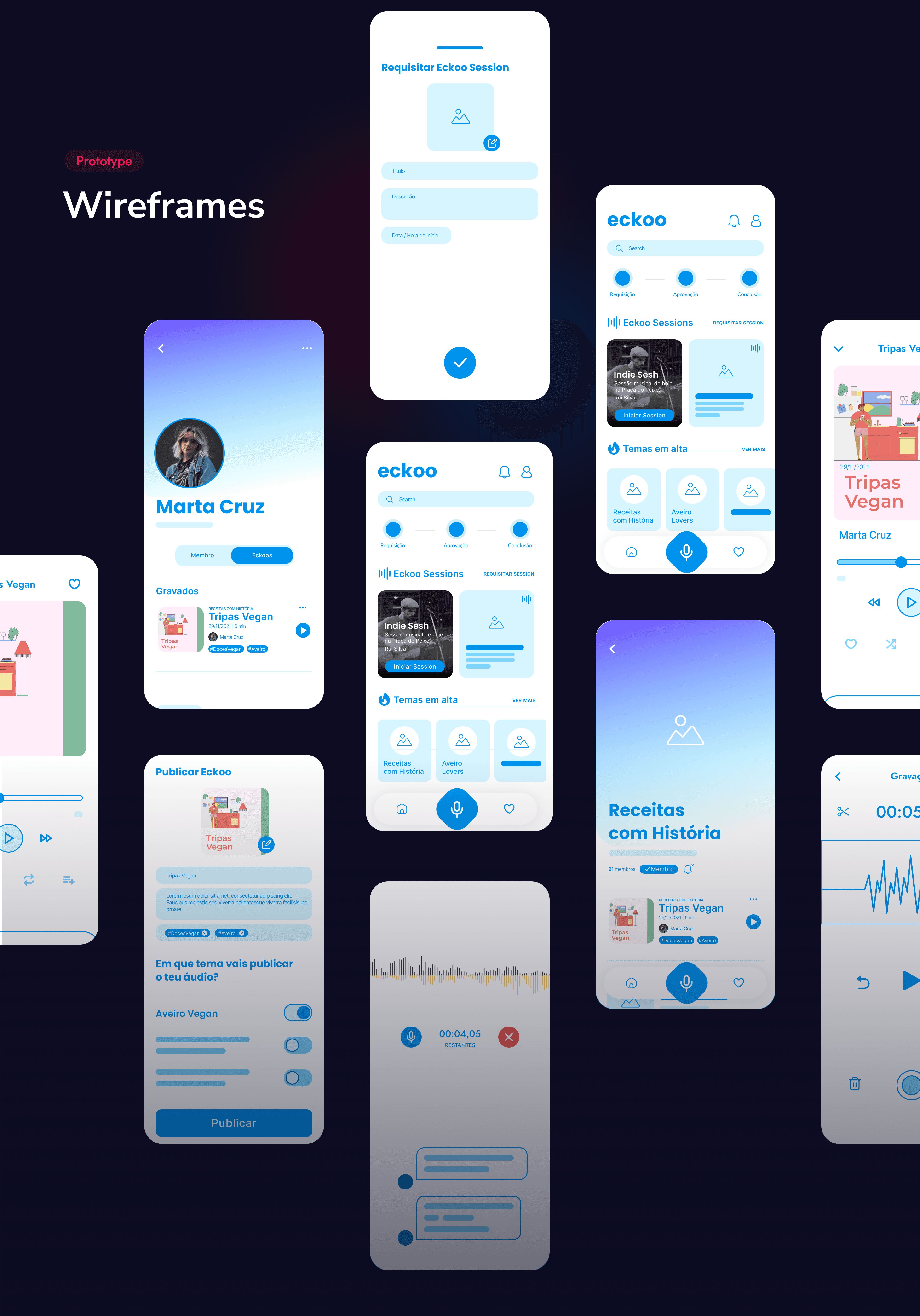
With the ideas in place, we started building prototypes. We began with low-fidelity prototypes to visualize the platform’s layout and flow. These early prototypes helped us identify potential issues before investing too much time in development.
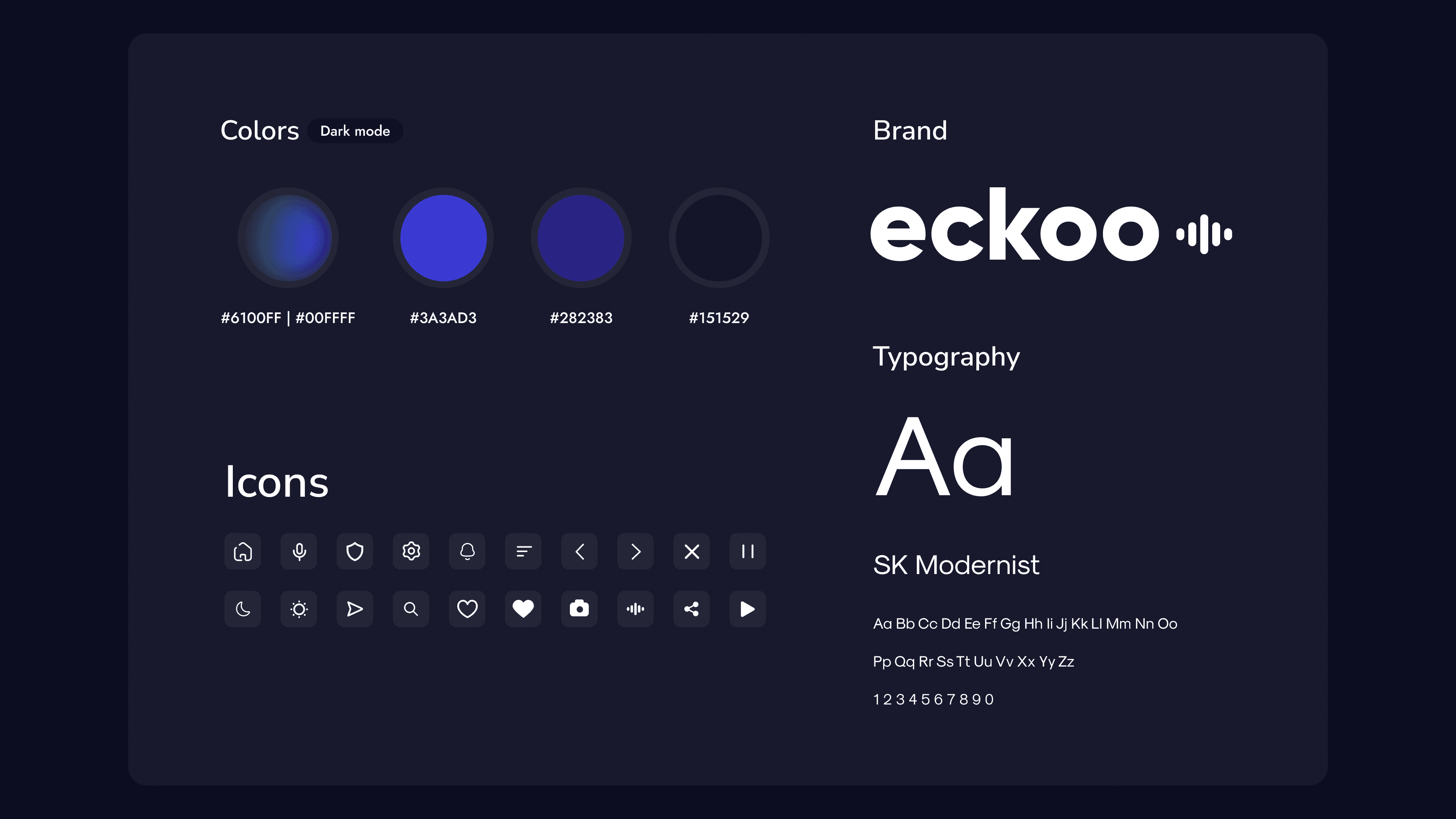
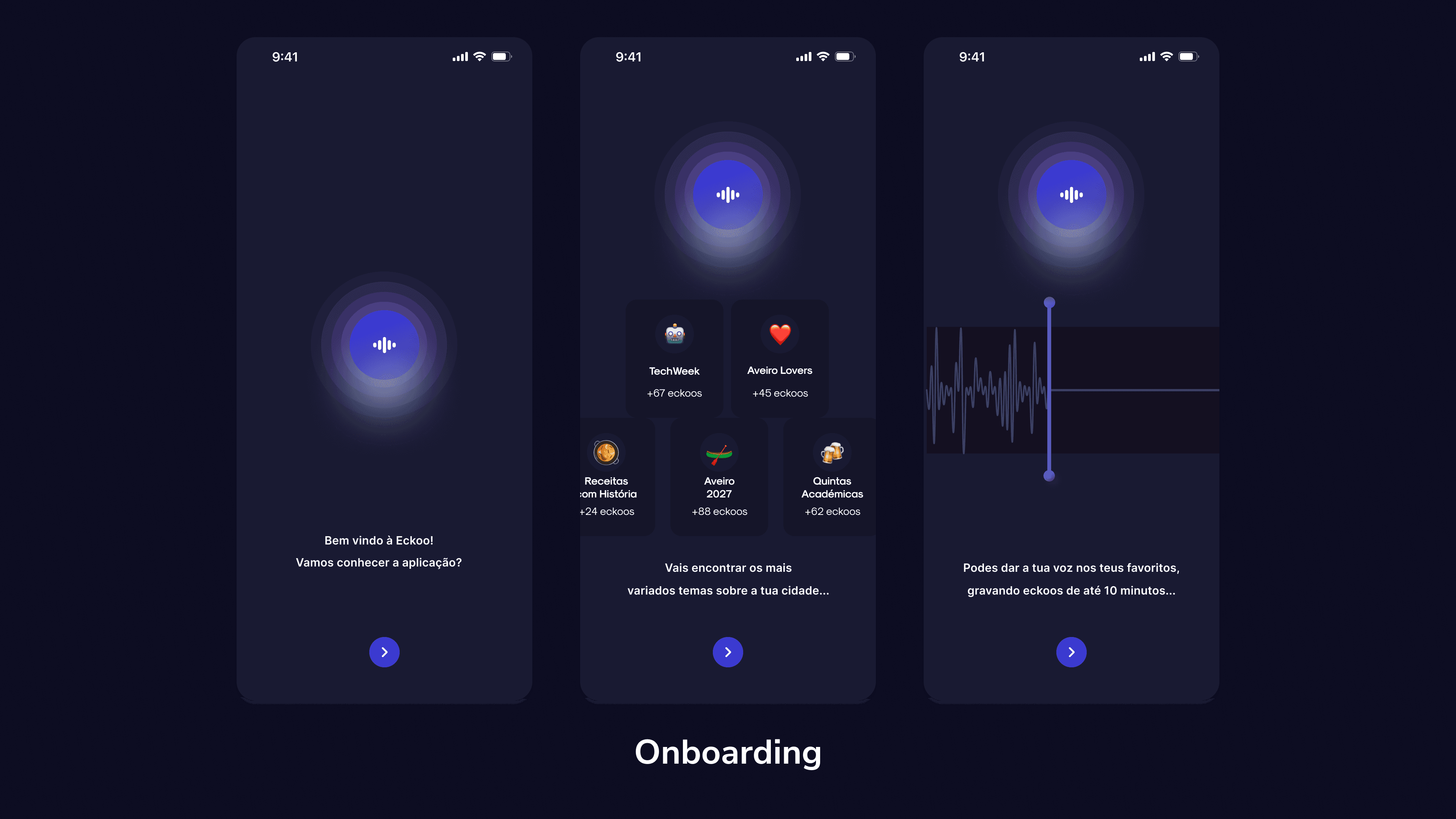
Next, we created high-fidelity prototypes with more detailed designs and interactive elements. The visual identity was applied while following accessibility guidelines and principles such as Gestalt, in order to best represent how the application would function in a real-world context. Both wireframes and high-fi prototypes were used for testing to gather feedback and refine the final design.
Test
In product development, conducting tests through an iterative process always brings significant advantages and justifies the cost involved, as it allows us to identify flaws, uncover opportunities for improvement, and gain new development insights early in the process.
Eckoo’s interface was developed through extensive user testing, including guerrilla testing and usability studies with 11 participants. Firstly, we used The Anticipated Experience Evaluation that enabled us to refine the product at a low-cost stage using a low-fidelity prototype, potentially enhancing its overall quality.
After adjusting the design based on the feedback we gathered, we moved on to testing the high-fidelity prototype, the usability tests were conducted with five participants and the main outcomes are listed bellow:
Sucess rate of 100% for all tasks.
SUS score of 90.5, indicating high usability.
SAM Feedback indicated positive emotional responses, with users feeling satisfied, motivated, and in control while using the product.
Final Insights
💡 User needs drive innovation. The development of Eckoo highlighted the critical role of initial research in understanding the problem and defining the right solution. A user-centered approach was essential in identifying real user needs and shaping the product accordingly.
💡 Testing refines the experience. Usability testing was instrumental in pinpointing key functionalities, filtering out unnecessary features, and identifying interface errors. This iterative process ensured the product met user expectations as closely as possible.
💡 Accessibility is non-negotiable. Applying mobile UI best practices, focusing on hierarchy, spacing, and color contrast, ensured an inclusive and intuitive experience for all users.
💡 Iteration leads to impact. Every phase of the project was informed by real user feedback, allowing Eckoo to evolve into a product that truly meets the needs and expectations of its audience.